After a short period of uncertainty, on yesterday’s Mothering Sunday in the UK, that soon turned into controversy, and then a press frenzy, Kate Middleton, the Princess of Wales, the future Queen Consort next to the future King William, had to apologise today for “..for any confusion the family photograph we shared yesterday caused.” Kate owned up to being the perpetrator of the heinous crime of, well, not editing her family photos very well: “Like many amateur photographers, I do occasionally experiment with editing.”
The seemingly innocuous and rather pleasant family snap of Kate and her three children, taken, we are told, by William, was distributed by the Royal Family’s official media relations office at Kensington Palace. It was accepted by a number of photo press agencies, including Reuters, AP, and Getty, and duly distributed.
But a catalogue, or should that be ‘montage’, of errors, led to a ridiculous media circus performance, with the photo being issued with a so-called ‘kill order’, or basically being withdrawn from distribution. This ‘closing the stable door after the horse had bolted’ episode was after the realisation that the photo was an in-expertly pieced-together cut-and-shut Photoshop job. In turn, this led to hyperactive speculation about Kate’s health after major surgery at the beginning of the year, subsequent lack of public appearances, and the potential motives for trying to deceive everyone with a Photoshop job.
From the photography perspective, my own personal opinion is that the press people at Kensington Palace can’t escape blame, and neither can the photo desk editors at the independent press agencies, who accepted and distributed the image.
Where was the quality control at the Palace? Why didn’t the press agencies, who have expert photo editors, not spot the suspicious attributes of the shot immediately, before rubber-stamping its distribution?
The whole event remains cloaked in a a lot of secrecy, which is how Royal advisers operate. No replacement image has been offered. We don’t know if someone in the Royal household simply saw the photo and said to Kate: “Oooh, nice photo, can we use this?” Apart from poor old Kate, nobody else has admitted any concurrent guilt.
My message to Kate is; for an amateur Photoshop job, it wasn’t actually that bad. Keep it up and don’t get put off by the silliness surrounding you!
After a break, last year, The Photography and Video Show returns for 2024 at its usual Birmingham National Exhibition Centre (NEC) venue. The doors open on Saturday, 16th March, at 10AM, and close, each day at 5PM, until Tuesday, 19th March.
Apart from Pentax, all the big camera brands will be there, including Canon, Sony, Panasonic Lumix, OM System (Olympus as-was), Fujifilm, and Nikon. It will be interesting to see if the latter will include an exhibit of RED digital cinematic cameras, after Nikon’s recent revelation that it is to acquire the company.
On the lens front, regulars Tamron, and Sigma, will be showing their optics, while less familiar, up and coming, marques like Laowa and Irix will also be at the show.
The Photography and Video Show is also the place for special show bargains, with all the top retailers, like WEX, LCE, and Cameraworld fighting it out for your business.
Don’t forget there will be a lot of stands showing accessories, from flash to filters and tripods and monopods, as well as bags, printer paper, and much more. Talking of printing, Epson will be there.
Studio is a key word at the show and there are normally on-stand tutorials featuring pro photographers and models.
Software is, naturally, a big aspect of digital photography, and Skylum, and Adobe will be there, with the latter demonstrating its latest Creative Cloud still and video software tools, with another buzzword – AI – at the top of the agenda.
One stand I expect will be very busy is L195, where Just Serving Photographers will be running a sensor cleaning service – first come, first served.
Many of the photography magazine publishers will be at the show, so look out for special offers and goody bags for subscription sign-ups.
Finally, there are lots of live presentations, tutorials and talks that you can attend – find out more here.
The show is never a disappointment – it’s highly recommended. It could even revive a flagging photography mojo!
Leica has unveiled what some are declaring is the best ever Leica camera, the SL3
However, it’s still as idiosyncratic as your usual Leica
With a 60 megapixel backside-illuminated (BSI) full frame CMOS sensor, that is 5-axis shift stabilised, the new Leica SL3 is one of the highest resolution full frame format mirrorless cameras on the market. And you get phase-detect focusing. It’s priced US$6,800 (€6,300) and is available straight away.
At first glance, the SL3 looks very similar to the now, 5 year old, Leica SL2. But a lot has changed internally. The image buffer has been doubled from 4GB to 8GB. Of course, we have the new sensor, which seems very similar, on paper, to the one you will find in the Leica M11 rangefinder, launched two years ago, plus 315 on-sensor phase-detect focusing points. The suspicion is that it is a Sony IMX455, rather than the 47 megapixel part in the SL2, which probably had Panasonic DNA. The mechanical shutter mechanism has a different ring to it.
There is now a CF Express card slot alongside one SD-XC slot, and the rear display screen has moved further to the left, displacing the three main control buttons, which are relocated to the right of the screen.
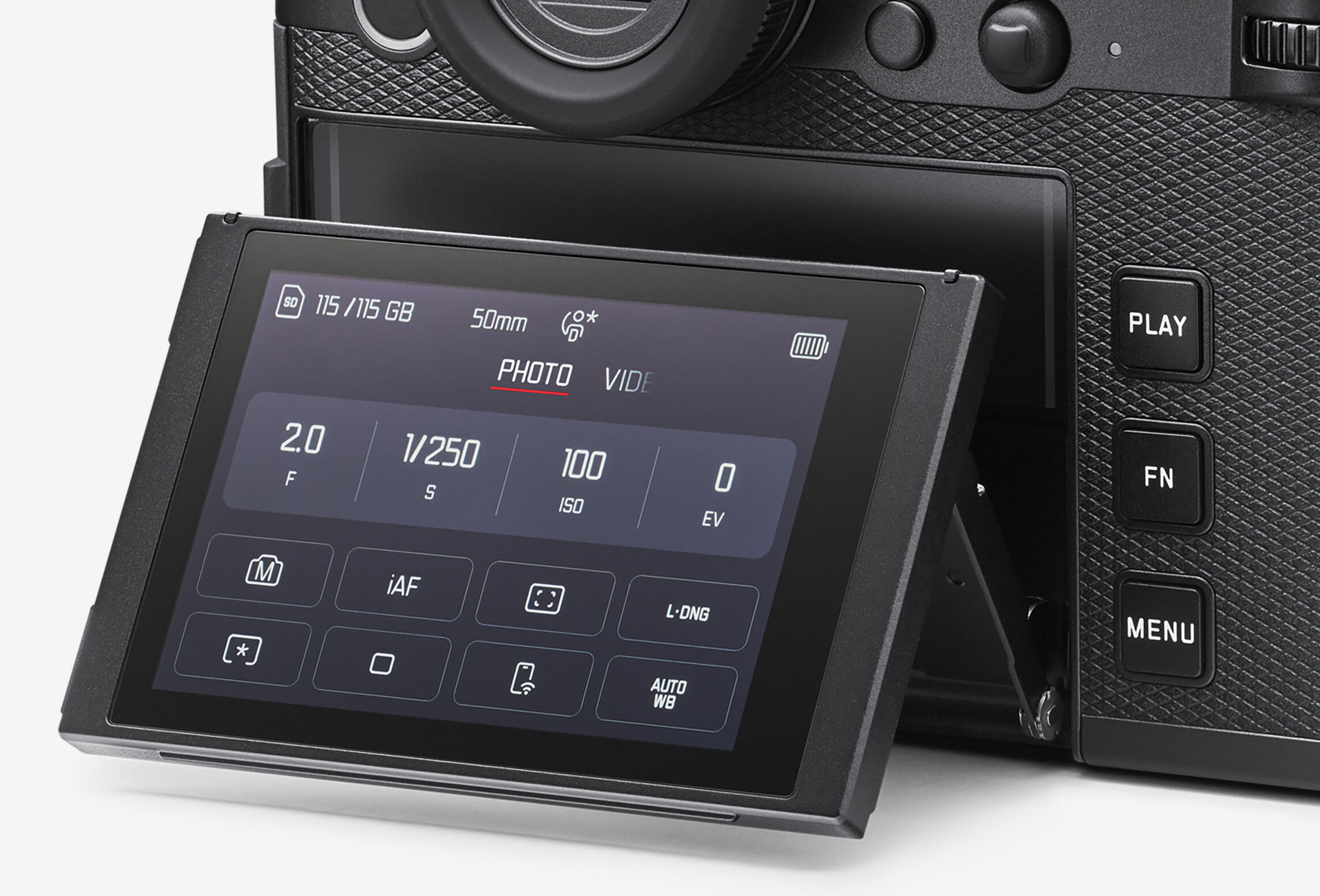
And, now, the SL3 is endowed with an up/down tilting rear display.
So far, so good. But the SL3 is no Ferrari. Its technical shutter shooting rate is limited to 5 frames per second. That wouldn’t have been outstanding 20 years ago. This increases to 15fps in electronic shutter mode. That’s still far from the cutting-edge.
But buying a Leica has never been about being-cutting edge. Depending on who you speak to, it’s about the feel of the camera, the very distinctive and unique Leica design, and of course the optics.
At 60 megapixels, the sensor is knocking on the limit of the pixel pitch to pixel performance limit, but if the sensor is an IMX455, it’s sure to be an awesome performer under most conditions.
It’s also interesting to see how much motion picture capability has advanced up the list of priorities. Maybe this has something to do with Panasonic Lumix, Leica’s key technical partner, and fellow L-mount proponent. The SL3 can shoot up to 8K video, without any clip time constraints.
So, is this the best Leica ever? Probably. Is this the best mirrorless camera, ever? That’s another debate.
PRESS RELEASE
New: Leica SL3
The new mirrorless full-frame system camera from Leica is now available.
Wetzlar, 7th March 2024. In 2015, Leica Camera AG introduced the SL-System, uniquely combining the two worlds of photography and videography. From the beginning, Leica has
focused on partnering with its users and the photographic community to ensure that their products achieve exceptional standards. The result is a system which meets the highest
requirements in image quality, manufacturing quality, and ease of handling. Now, the long-established company presents the next generation of the mirrorless full-frame system: the
Leica SL3.
The rigorous demands of professional photographers have long served as a benchmark and inspiration for the development of the system, in particular the Leica SL3. The result is an
extremely versatile camera, offering unprecedented image quality in both photography and videography. The SL3 combines state-of-the-art technology, extraordinary design, and masterly
manufacturing quality – more compact, lighter, and even more user-friendly than its preceding model. The new functions of the Leica SL3 are based on an ongoing dialogue with professionals,
which is highly valued and cultivated by the company in the ever-changing world of photography.
At the core of the Leica SL3, you can find the BSI CMOS full-frame sensor with Triple Resolution Technology, which is safely protected in a solid all-metal body with elegant leather. To meet a
variety of photographic requirements, the sensor records raw files in DNG or JPEG format with a resolution of either 60, 36 or 18 MP. In each case, the full sensor surface is used. Together
with the dynamic range expanded to 15 f-stops and the impressive ISO range from 50 to 100,000, the SL3 delivers remarkably detailed images in outstanding quality – in all light
conditions.
With phase detection (PDAF), depth mapping (Object Detection AF), and contrast recognition (Contrast Detection AF), the innovative autofocus system of the SL3 combines the strengths
of three technologies to create razor-sharp pictures even in dim light. In addition, intelligent subject recognition supports the photography of dynamic scenes.
The lens bayonet, which is based on the L-Mount standard developed by Leica, facilitates the use of outstanding lenses from all of the Leica camera systems. Additionally, it is compatible
with a diverse array of ultra-wide to super-telephoto zoom lenses offered by L-Mount alliance partners. Therefore, the lens bayonet guarantees extensive system compatibility for the Leica
SL3. Specifically, the exceptional potential of the renowned Leica M-Lenses is fully harnessed, thanks to the unique design of the image sensor and an external light sensor. The integrated
in-body image stabilisation further broadens the scope of application for M-Lenses.
The EyeRes® viewfinder of the Leica SL3 is equipped with an elaborately manufactured optical system made of glass lenses. It always shows the subject crystal clear with up to 120 frames
per second and a resolution of 5.76 million pixels. The live preview enables full control over the exposure and composition of images even before releasing the shutter. Another new feature is
the tiltable 3-inch high-res touchscreen with a high-quality tilting mechanism. Even more creative possibilities can be achieved thanks to its additional viewing angles.
Videos are recorded in a resolution of up to 8K, supported by efficient codecs such as H.265 and ProRes by Apple. A dedicated time code interface allows for professional image and sound
synchronisation on set. Throughout this process, the new Maestro-IV processor with L² technology easily handles the vast amounts of data, resulting in pictures with magnificent
colour rendering as well as excellent noise performance.
Another highlight is the new user interface of the Leica SL3. Every optimisation is aimed at enhancing user comfort such as ergonomics, tactile feel, and menu navigation. As a result, the
grip, button layout, and overall camera design have been refined to further promote intuitive handling. The updated, streamlined icon and menu design offer a clear structure, facilitating
even easier navigation. The distinct separation of photo and video modes proves especially beneficial as it is aided by a specific colour code for differentiation: red for photo mode and
yellow for video mode.
Furthermore, the camera’s main functions can be completely adapted to individual needs. The freely assignable FN keys and the optimised touch interaction in the menu add to the intuitive
and comfortable operation of the camera. When photographing and filming, the SL3’s user interface aligns itself in landscape or portrait format, depending on the camera position. Thanks
to the convenient handling, improved ergonomics, robust design, and IP54 certification, photographers can focus on capturing the shot in any weather and environment. At the same
time, the new SL3 is noticeably lighter and more compact than its predecessors and is even more comfortable to use.
The Leica user experience undergoes continuous refinement. Regular firmware updates, influenced by valuable customer feedback, are seamlessly delivered to the SL3 through the
Leica FOTOS app. This ensures the camera stays current and future-proof in a user-friendly manner.
The camera’s new interface and improved connectivity ensure a seamless professional workflow. There are slots for the memory cards CFexpress type B and UHS-II-SD, a USB-C port
for high-speed data transmission, tethering, and power supply as well as a full-size HDMI 2.1 output for external monitors or recording equipment. Additionally, Bluetooth and Wi-Fi with
MIMO technology ensure a stable and fast connection to the Leica FOTOS app. As a certified Apple “Made for iPhone® and iPad®” accessory, the Leica SL3, together with the included USB-
C cable, enables a direct connection to Apple products.
The new BP-SCL6 battery, along with the separately available double charger, offers ample capacity. This dual charger allows for the simultaneous and faster charging of two batteries.
The double charger and the additional battery are available individually or as an attractive set. Moreover, the accessories within the SL-System now include a new handgrip and a DC coupler.
The DC coupler can be inserted into the camera’s battery slot to ensure a continuous power supply via USB-C. The new carrying strap with an innovative attachment and a hard-wearing
wrist strap for the hand grip have also been specially designed for everyday professional photography use.
Conclusion: In close partnership with photographers, Leica Camera AG has taken the SL- System to a new level. With an optimised design, efficient user interface, and the versatile L-
Mount bayonet, the Leica SL3 is a highly modern, intuitive full-frame camera with outstanding image quality. It combines precision, the best materials, and unprecedented manufacturing
quality “Made in Germany”. Robust and reliable, it masters every challenge in photo- and videography, setting new standards in terms of user comfort and a seamless professional
workflow with extended interfaces, improved connectivity, and useful accessories.
The Leica SL3 is now available globally at all Leica Stores, the Leica Online Store, and authorised dealers. The retail price will be €6,800.00 including VAT.
Leica Camera AG is an international, premium manufacturer of cameras and sports optics. The legendary reputation of the Leica brand is based on a long tradition of excellent quality, German
craftsmanship and German industrial design, combined with innovative technologies. An integral part of the brand’s culture is the diversity of activities the company undertakes for the
advancement of photography. In addition to the Leica Galleries and Leica Akademies spread around the world, there are the Leica Hall of Fame Award and, in particular, the Leica Oskar
Barnack Award (LOBA), which is considered one of the most innovative sponsorship awards existing today. Furthermore, Leica Camera AG, with its headquarters in Wetzlar, Hesse, and a
second production site in Vila Nova de Famalicão, Portugal, has a worldwide network of its own national organisations and Leica Retail Store.
It’s good to see two great names from the photo industry combining to provide a couple of promising resources, for no charge. I’ve reproduced the press release, below, pretty much verbatim, as it says what it needs to well, by itself:
PRESS RELEASE
Datacolor Hosts TWO Exclusive Webinars with Robin Whalley: Integrating Colour Management with DxO PhotoLab for Prints.
Datacolor, a global leader in colour management solutions, has announced two upcoming webinars featuring renowned landscape photographer and author Robin Whalley. The series of webinars will focus on integrating Datacolor’s colour management tools into DxO’s PhotoLab software.
In this exclusive event, Robin Whalley will share insights into his innovative use of Datacolor products, including the Spyder Checkr Photo, and how it integrates with DxO’s PhotoLab in order to create exceptional printed photos. Attendees will gain valuable knowledge on monitor calibration, understanding colour spaces, soft proofing and how to print in Dxo PhotoLab.
Datacolor and Robin Whalley will be running two webinars on the topic. Each webinar will be approximately an hour in length and is free to join. Attendees can sign up here.
Event Details: Webinar 1
• Topic: Fine art printing for hobbyist photographers
• Date: 26th March
• Time: 19:00 GMT
Event Details: Webinar 2
• Topic: Exporting and printing images with DxO PhotoLab
• Date: 16th April
• Time: 19:00 GMT
Robin Whalley is a UK-based landscape photographer and author, whose tenure spans nearly three decades and includes over 20 books. His passion and acumen for photography and teaching has earned him a solid reputation within the photography community, with his ultimate goal being to help 1 million photographers improve their photo editing through his tutorials, YouTube videos, books, and courses. Find out more about Robin Whalley on his website or via his YouTube channel.
About Datacolor
Datacolor is a leading provider of colour management solutions, dedicated to ensuring accurate and consistent colour reproduction across various industries. With a rich history of innovation, Datacolor empowers professionals and enthusiasts alike to achieve superior colour results.
Registration Information
To register for the webinar and receive further updates, visit the official landing page. By registering, attendees agree to receive relevant content, products, and services from Datacolor. Subscribers can opt out of these communications at any time.
About Datacolor Webinars
Datacolor webinars offer a platform for industry experts to share their knowledge and insights on various aspects of colour management. These events provide valuable educational opportunities for professionals seeking to enhance their colour workflow.
Disclaimer
The webinar and its content are provided for informational purposes only. Views and opinions expressed by the presenter are solely their own and do not necessarily represent the views of Datacolor.
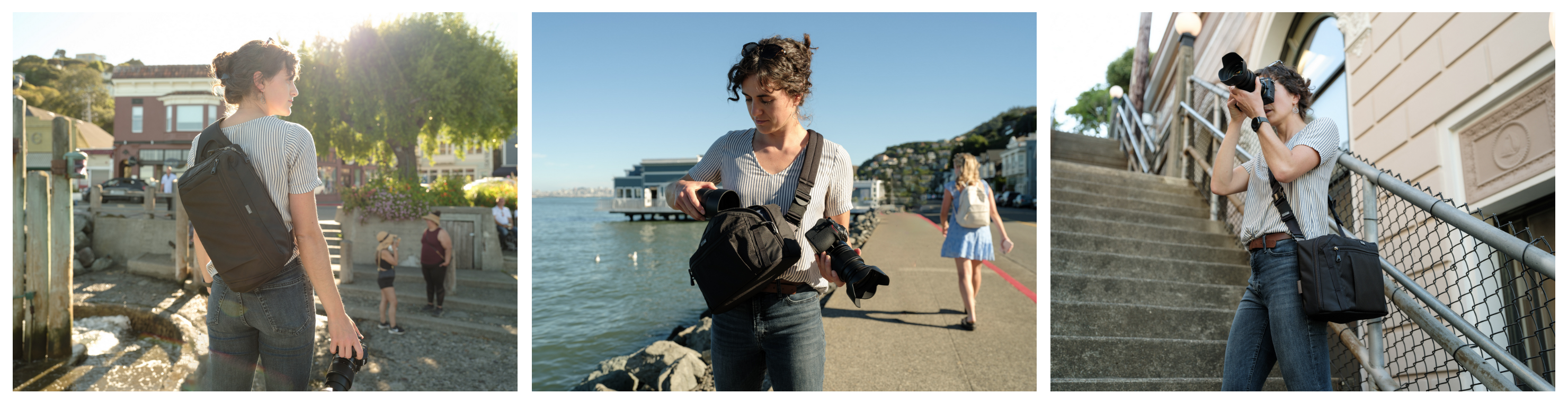
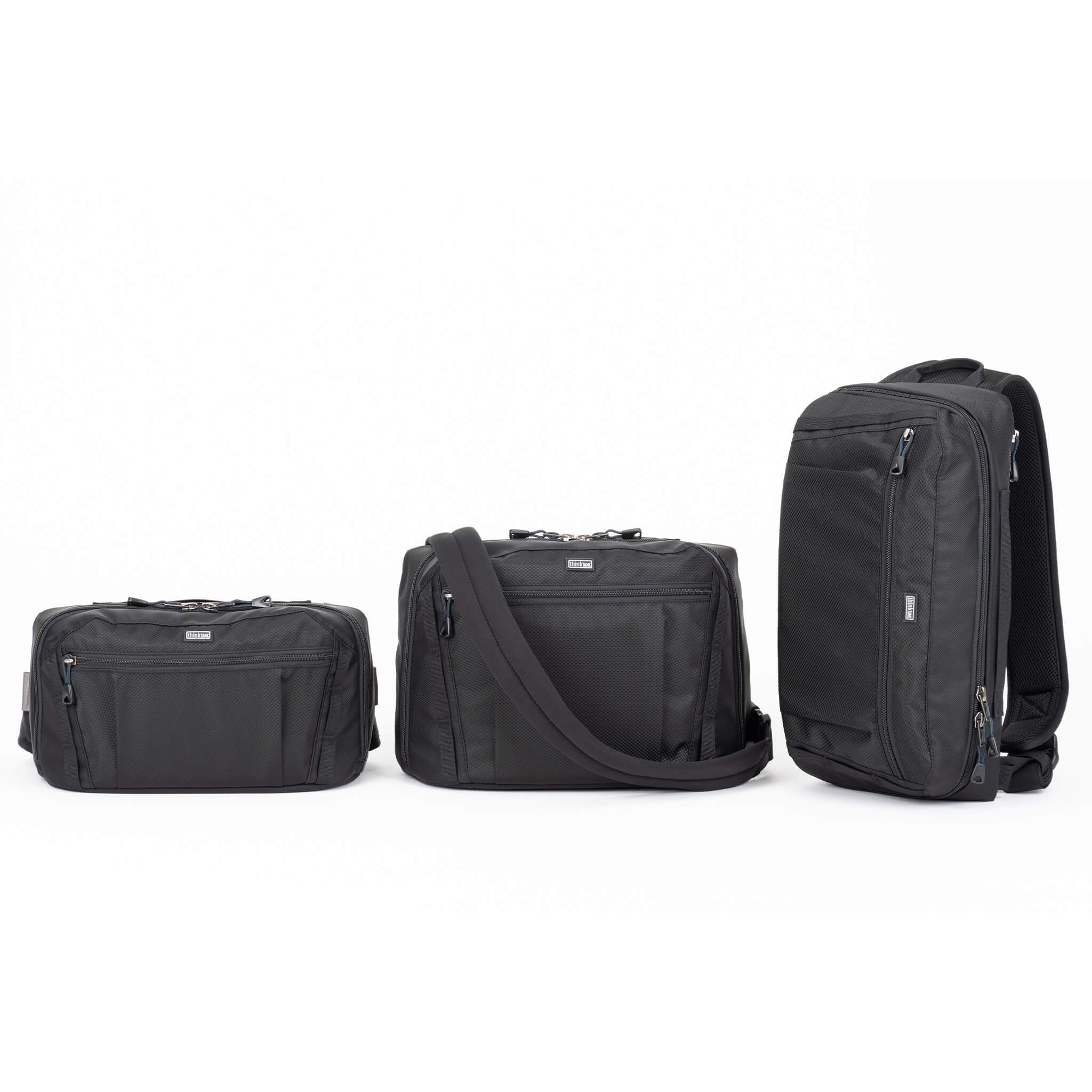
Think Tank Photo has announced a series of three new bags aimed at photojournalists, the Presspass Series. According to Think Tank Photo, the bags were Designed with input from their target market, photojournalists, and can be worn as a sling, crossbody, waist belt, or shoulder bag. Think Tank Photo’s promotional video does a great job on explaining what each bag in the series has to offer:
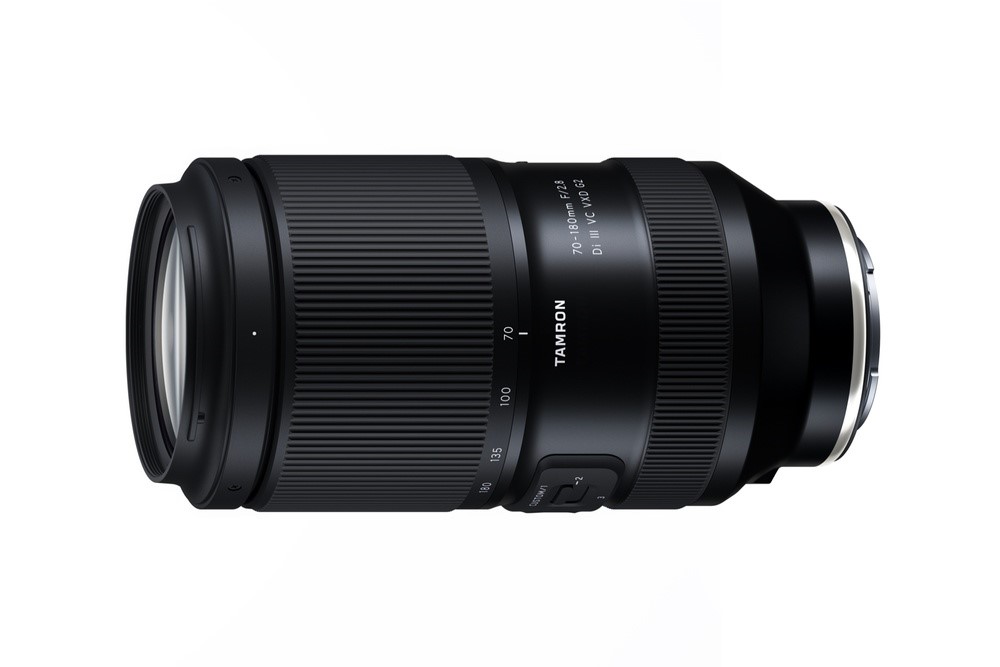
Tamron 70-180mm F/2.8 Di III VC VXD G2 for Sony E-Mount
This autumn, Tamron will start shipping a VC G2 version of its popular Sony E-Mount tele-zoom, the 70-180mm F/2.8 Di III VXD. The updated lens is called the 70-180mm F/2.8 Di III VC VXD G2. The big news is that the new lens now has in-lens ‘VC vibration compensation’, or Optical Image Stabilisation, missing from the current lens.
Tamron’s 70-180mm f/2.8 is an interesting design, which has been around for three years. It’s not a legacy DSLR lens; it’s mirrorless through and through. It’s an attractive a zoom range and even more attractive for its f/2.8 constant maximum aperture. It’s also relatively small and light, and more affordable than some alternative lenses with a similar optical specification.
From an industry viewpoint, the 70-180 is also interesting because, earlier this year, Nikon announced an own-branded version of the lens, the Nikon Z 70-180mm f2.8. Nikon is remaining silent, but there is no denial that Tamron makes the Nikon version, for Nikon.
The new G2 version has a number of improvements, besides the addition of VC, including:
Closer minimum focusing from 0.85m to 0.3m
Revamped optical design (though no specific details were provided)
Compatibility with Tamron’s Lens Utility software apps
Firm pricing and availability are to be confirmed.
Official press release:
Tamron 70-180mm F/2.8 Di III VC VXD G2 for Sony E-Mount
Development Tamron 70-180mm F/2.8 Di III VC VXD G2 for Sony E-mount
Press release 2023-08-07 12:00
The Transcontinenta UK Ltd., distributor for Tamron UK and Ireland, announces the development of the Tamron 70-180mm F/2.8 Di III VC VXD G2 (Model A065), a fast-aperture telephoto zoom lens for Sony E-mount full-frame mirrorless cameras.
The Tamron 70-180mm F/2.8 G2 marks the further evolution of the first-generation model that earned high acclaim in the marketplace and incorporates several enhancements. Leading the list of improvements of the new G2 lens is the incorporation of Tamron’s proprietary VC (Vibration Compensation) mechanism. The lens maintains the maneuverability of class-leading compact size and weight while enabling shooting with greater stability.
The optical design has been revamped from the first-generation 70-180mm F/2.8 and achieves uncompromising high image quality across the entire zoom range. Tamron also shortened the MOD (Minimum Object Distance) at the wide end to 0.3m compared to the first-generation 0.85m, enabling users to enjoy unique photographic expressions distinctive to the lens.
Additionally, the new 70-180mm F/2.8 G2 zoom features Tamron’s renowned VXD (Voice-coil eXtreme-torque Drive) linear motor focus mechanism enabling high-speed, high-precision auto-focusing that performs well whether shooting stills or video. The new 70-180mm F/2.8 G2 zoom also supports the dedicated Tamron Lens Utility™ and Tamron Lens Utility Mobile™ apps that were developed in-house by Tamron. The software can be used to customize functions based on various shooting styles for still photography and video. The new lens design improves operability and provides scratch resistance. This single lens combines profound maneuverability and practicality that is worthy of the second-generation G2 badge and will deliver shooting experiences that make a fast-aperture telephoto zoom lens even more enjoyable.
Product Highlights
• Even with VC image stabilization, the lens is just 156.5mm long and weighs only 855g
• Revamped optical design delivers truly superb performance at all focal lengths
• VXD provides high-speed and high-precision AF with vastly improved subject tracking
• Equipped with Tamron’s proprietary VC mechanism
• Achieves MOD of 0.3m at 70mm and 0.85m at 180mm
• Proprietary software tool Tamron Lens Utility for lens function customization
• Additional features for greater convenience
• User-friendly features (Moisture-Resistant Construction and Fluorine Coating)
• Compatible with many camera-specific features and functions, including Fast Hybrid AF and Eye AF
• 67mm filter size, same as most other Tamron lenses for mirrorless cameras
Availability and price
The Tamron 70-180mm F/2.8 Di III VC VXD G2 (Model A065), for Sony-E mount full frame cameras will be available from Tamron dealers in the UK and Ireland in the fall 2023. The exact date and recommended retail price will be announced in due course.
About Tamron Co., Ltd
Tamron offers a wide range of original optical products, from interchangeable lenses for digital cameras to various optical devices for consumers and OEMs. They produce optical products that contribute to a variety of industries, and will continue to apply their rich creativity and leading technical capabilities to various industrial fields. Furthermore, Tamron is fully aware of its responsibility to the environment and strives to contribute to the preservation of the natural environment in all of its business activities.
Optical Product Line-up
Interchangeable lenses for mirrorless and DSLR cameras, surveillance camera lenses, FA and machine vision lenses, videoconferencing lenses, camera modules, automotive lenses, digital still camera lenses, camcorder lenses, drone lenses and medical lenses.
Topics: Photo • Video
Benro’s latest Cyanbird hybrid carbon fibre and alloy travel tripod only weighs a smidgen above a kilo, goes up to 1.55m in height , and folds down to just 46cm in length and 6cm in width. It also has an Arca-Swiss compatible head. Here’s the press release with more details:
Benro Cyanbird travel tripod
PRESS RELEASE
Welcome to Benro’s newest and most visually stunning compact tripod!
Easy on the eye, easy to carry, engineered to deliver a robust performance.
Wolverhampton 1st August – Benro announces the arrival of the Cyanbird Tripod. Legend has it that a Cyan Bird was strong and dexterous whilst transforming into a stunning auspicious creature – need we say more about this latest tripod design!
Compact, lightweight, sturdy and striking – the Benro Cyanbird is a travel-friendly tripod kit that will be the perfect companion for your photographic adventures and content creation.
The Cyanbird boasts ocean blue anodised castings with satin aluminium lever leg locks, while arch-profile shaped legs wrap around the centre column giving the Cyanbird a folded diameter of just 6cm. The legs are made up of carbon top tubes and aluminium lower leg sections – carbon fibre for the top section because it saves weight and, well, it looks amazing!
There is a weight hook at the bottom of the centre column, while the upper section of the centre column contains three ¼” accessory mounts. The centre column can also be split so that the tripod can be used at a minimum height of just 17cm.
The kit includes the Arca-compatible N00P ball head with a single-action lock knob for fast and easy operation, while the quick-release platform can be panned independently of the main ball lock for precise camera positioning.
Don’t be fooled by the Cyanbird’s looks, it’s a serious tripod that weighs just 1.05kg, will support up to 4kg, and can reach 155cm high while being able to fold down to just 46cm, making it easy to store in your backpack or camera bag. Perfect for the photographer that travels or the traveller who photographs!
The Cyanbird includes a ‘roll-up’ padded carry case, providing easy access to your tripod and any other gear you store inside.
Don’t settle for less than the best. Upgrade to the beautiful Benro Cyanbird Tripod TCBH15N00P tripod kit today!
Key Features
Compact and easy to carry – weighs just 1.05kg and folds down to just 46cm
Maximum operating height 155cm, minimum height 17cm
Narrow profile when folded – just 6cm diameter
Aluminium flip-leg locks are quick to use and strong.
Two section splittable centre column
Hybrid carbon fibre & aluminium leg construction able to support up to 4kg
Single action, Arca-compatible ball head with panning quick-release platform.
New ocean blue finish
Stock will be available in UK and Ireland photographic retailers from 1st September 2023.
Please visit https://uk.benroeu.com/ for stockist information and details of the full Benro support range.
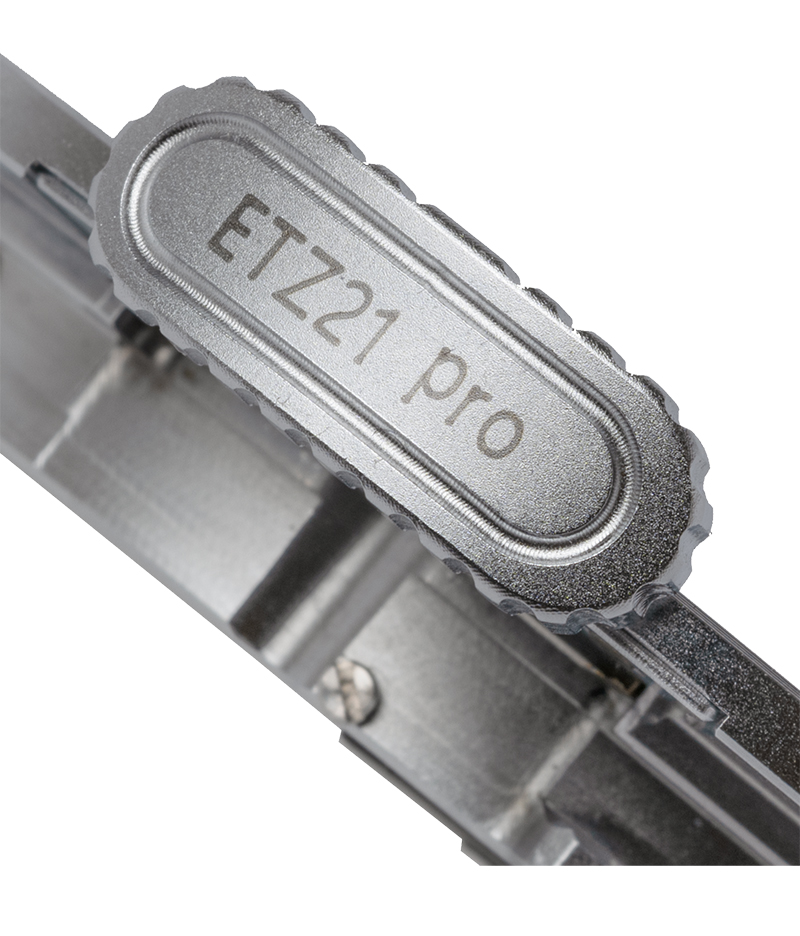
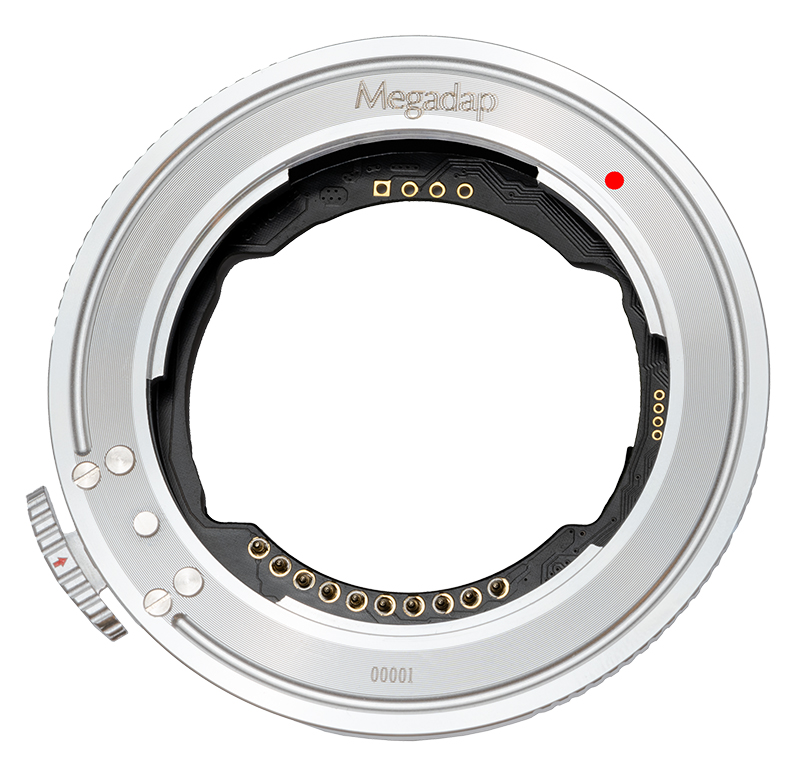
Megadap ETZ21 Pro Sony E lens to Nikon Z AF adapter
Megadap, which previously produced a motorised adapter enabling Leica M lenses to be mounted and autofocused on Nikon Z bodies, had produced a Sony E-mount lens to Nikon Z-mount adapter.
Thanks to the deeper flange/back distance afforded by Sony E-mount lenses, there is enough space for an adapter to fit between the back of a Sony E-Mount lens and the flange of a Nikon Z body lens mount., and retain focusing to infinity. Megadap has incorporate the necessary electronics to enable E-Mount lenses to communicate with the host Nikon Z body, enabling auto-focusing of the lens by the camera.
Compatibility with both APS-C and Full Frame NIkon Z bodies is provided by Megadap. The company says that the adapter works with most E-mount lenses, but warns Viltrox and Yongnuo brand lenses may not work.
The adapter, called a ETZ21 Pro, is available now, with free international shipping, priced US$249